Lewis Uriri Rejects Chivayo’s US$350,000 Gift Package
Advocate Dr Lewis Uriri has rejected a US$350,000 gift package offered by Wicknell Chivayo, citing professional independence and public confidence. The decision has triggered wider debate, including contrasting reactions from other lawyers and public figures.

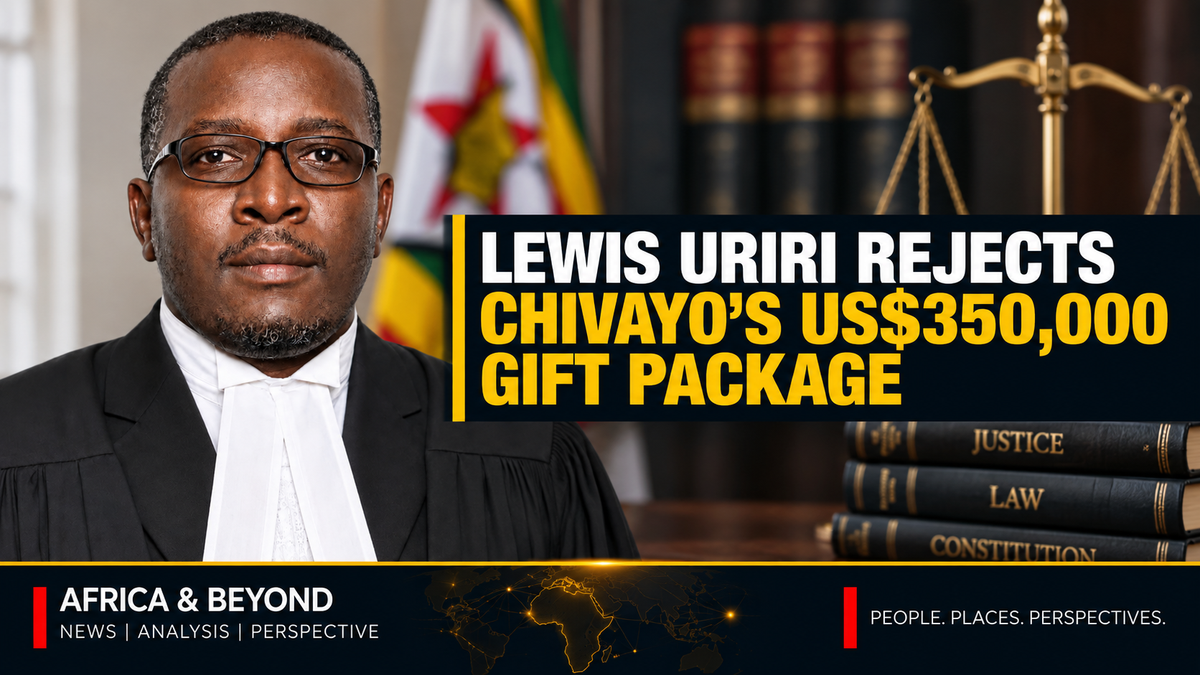
HARARE — Senior Zimbabwean lawyer Advocate Dr Lewis Uriri has declined a gift package worth US$350,000 publicly offered by businessman Wicknell Chivayo, saying accepting the benefits could create a perception of personal financial obligation beyond their concluded professional relationship.
The package announced by Chivayo comprised a brand-new 2026 Range Rover Sport Autobiography valued at US$250,000, US$50,000 in cash for fuel and a further US$50,000 for Uriri’s wife, who is also a lawyer.
Chivayo announced the gifts in a public tribute in which he praised Uriri as a “lawyer par excellence” and credited him with representing him with courage, commitment and professionalism in previous legal matters.
However, Uriri and his wife subsequently rejected the entire package.
Uriri: No professional work since June 2024
In his response, Uriri said he had not spoken to Chivayo since June 2024 and had undertaken no professional work for him since then.
He said the legal work referred to by Chivayo had been conducted in his professional capacity and had already been paid for in full.
Uriri said the announcement came as a surprise and without prior discussion, adding that the value of the gifts and their explicit connection to previous professional services required careful consideration.
He and his wife therefore decided to decline the vehicle and both cash gifts.
Professional independence at the centre of the decision
Uriri said his decision was informed by professional standards governing lawyers, including Zimbabwe's Legal Practitioners' Code of Conduct.
He said lawyers are expected to preserve their integrity, professional independence and public confidence in the profession.
Uriri also referred to international principles concerning the independence of lawyers and said accepting the gifts could create a perception of a personal financial obligation extending beyond a professional engagement that had already concluded and been fully remunerated.
He made clear that the decision was not simply about the monetary value of the offer.
Uriri said he and his wife placed importance on protecting their professional standing and public confidence in their independence.
Their decision, he said, was firm: they would not accept the vehicle or either of the cash gifts.
Chivayo's position
Chivayo presented the offer as a gesture of appreciation for Uriri's previous legal work.
In his public tribute, he praised the advocate's commitment and representation and instructed him to collect the Range Rover and the US$50,000 fuel money.
He also extended a US$50,000 payment to Uriri's wife. The combined value of the announced package was US$350,000.
There is no indication in the available reporting that Chivayo had publicly responded to Uriri's refusal at the time of publication.
Zivhu predicts Uriri could change his mind
The decision has also generated commentary from outside the immediate legal dispute.
Hon Zivhu, writing on X, suggested that some people who initially rejected substantial gifts had later accepted them.
“Many people, including Makandiwa, rejected these gifts at first, but later they collected them,” Zivhu wrote.
He then predicted that Uriri could eventually collect the gifts, saying: “Wait a few days, and the man will come to collect the gifts.”
Zivhu also advised people who receive such offers to accept them and remain quiet.
Those comments are Zivhu's opinion and prediction, rather than evidence that Uriri intends to reverse his decision. Uriri's own statement says that the decision by him and his wife is firm.
Other lawyers weigh in
The episode has also prompted reactions from other members of the legal profession.
Advocate Thabani Mpofu publicly commended Uriri's decision, framing it as an issue of professional independence and the standards expected of lawyers. Nehanda Radio reported Mpofu's view that the decision demonstrated the importance of maintaining independence where personal financial benefits could potentially affect perceptions of professional judgment.
The contrasting reactions have shifted attention beyond the value of the gifts to a broader question about the relationship between lawyers and clients, particularly when substantial personal benefits are offered after professional work has already been completed.
The wider question
Uriri's rejection does not establish that accepting such a gift would necessarily amount to professional misconduct. His stated concern is narrower: that accepting substantial benefits connected to past professional services could create a perception of financial obligation and raise questions about independence.
The episode therefore places professional ethics, public confidence and the boundaries between personal generosity and professional relationships at the centre of a highly publicised debate.
For now, Uriri has made his position clear: the vehicle and both cash gifts will not be accepted.
Africa & Beyond — News | Analysis | Perspective