CHIWENGA’S CHINHOYI SPEECH: A WARNING SHOT IN ZANU-PF’S SUCCESSION BATTLE?

Vice-President invokes constitutionalism, grassroots power and collective leadership as Mnangagwa’s allies face scrutiny over proposed changes to the ruling party’s succession arrangements.
Africa & Beyond — Political Analysis
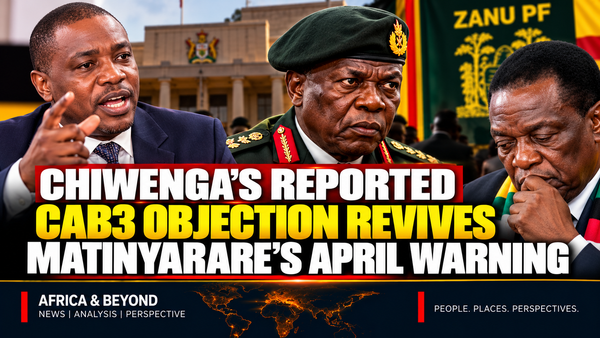
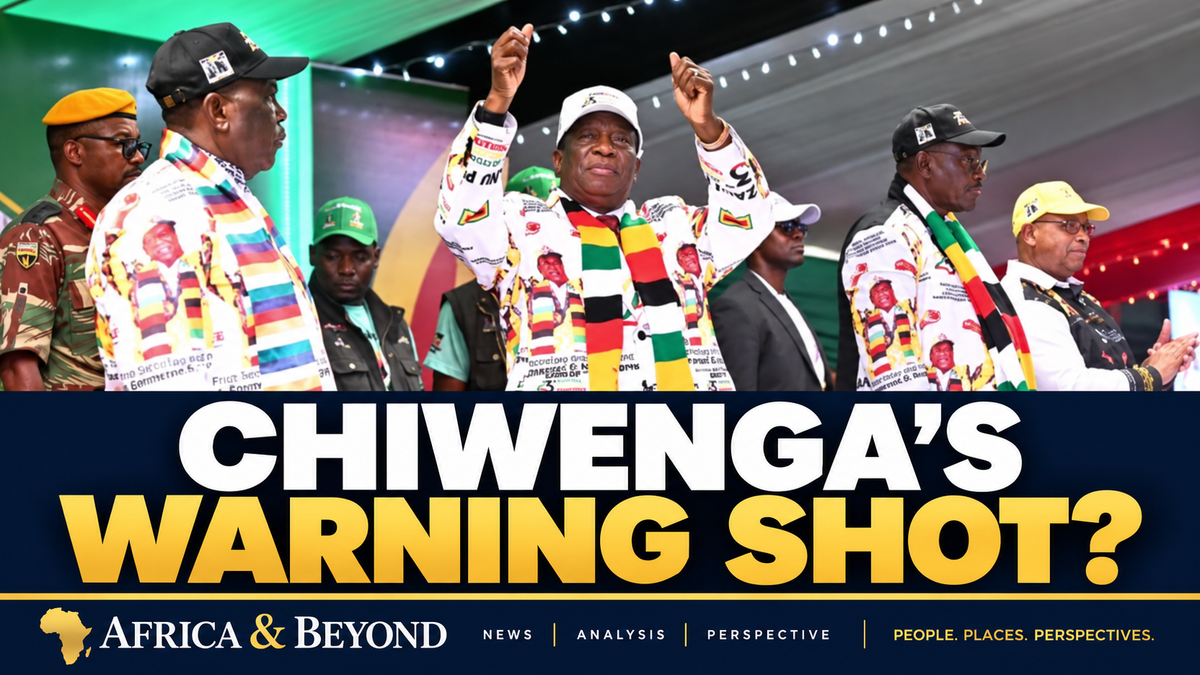
General Constantino Chiwenga’s address at ZANU-PF’s 23rd National People’s Conference in Chinhoyi was more than a ceremonial tribute to the heroes of the liberation struggle. Delivered before introducing President Emmerson Mnangagwa, the speech placed constitutionalism, collective leadership and grassroots participation at the centre of a party increasingly preoccupied with its own succession question.
Chiwenga did not openly declare war on Mnangagwa. He did not mention the President by name when discussing the principles governing political change, nor did he explicitly condemn the proposed constitutional amendments. Yet his choice of words raises important questions about the direction of ZANU-PF and the concentration of political power within its leadership.
His most consequential declaration was unmistakable:
“Change must be driven by the people, not imposed from above.”
In a party where the battle over leadership succession has intensified, that statement carries implications extending far beyond the formal theme of economic development and Vision 2030.
A message about who controls ZANU-PF
Chiwenga’s insistence that change must be orderly, constitutional and driven by the people comes at a critical moment. Proposals to restructure ZANU-PF’s constitution have generated controversy over the party’s leadership timetable and the arrangements governing its future presidential candidate.
Reports published this week indicate that the proposed changes could allow Mnangagwa to remain party president while the party separately determines its presidential candidate for the 2030 election. Other proposals reportedly concern the timing of the next elective congress and the duration of party leadership terms. The precise implications depend on the final wording and the procedures through which any amendments are adopted.
Against this background, Chiwenga’s appeal to constitutional procedures cannot be dismissed as routine conference rhetoric.
If party rules are changed to accommodate the interests of the incumbent leadership, the question becomes whether the process reflects the genuine wishes of party members or the preferences of those already holding power.
Chiwenga’s statement challenges the legitimacy of imposing change from above. It does not, by itself, prove that he was directly opposing a particular amendment. But it establishes a principle against which the proposed changes can be examined.
The issue is not simply whether Mnangagwa should remain party president. It is whether the party’s governing rules should be altered through a transparent, constitutionally compliant and genuinely consultative process.
“Our party belongs to the people, never to individuals”
Perhaps the most politically charged passage was Chiwenga’s declaration that ZANU-PF belongs to its members rather than individuals.
The statement raises a fundamental question: can a political organisation claim collective ownership while its most consequential decisions increasingly revolve around the political future of one leader?
ZANU-PF derives much of its historical legitimacy from the liberation struggle. Chiwenga deliberately invoked the sacrifices of the Chinhoyi Seven to remind delegates that the party was built through collective sacrifice, not the personal achievements of any single individual.
That historical argument cuts both ways.
The liberation struggle can be invoked to defend continuity, discipline and organisational unity. But it can equally be invoked to demand accountability and oppose the concentration of political authority.
If the party belongs to its members, those members must have a meaningful opportunity to influence its leadership arrangements. A conference should not merely provide a platform for endorsing decisions already made elsewhere.
Chiwenga’s words therefore challenge the principle of personal ownership of political institutions, even without identifying a particular individual as the target.
The 2027 congress and the succession question
The timing of the speech makes the debate particularly consequential.
The national constitutional changes signed into law in July 2026 extended presidential and parliamentary terms from five to seven years and moved the expected end of Mnangagwa’s current presidential term to 2030. The changes also altered the method of selecting the President.
The proposed ZANU-PF amendments raise a separate but related question: how will the party choose its leadership and presidential candidate under the revised national electoral timetable?
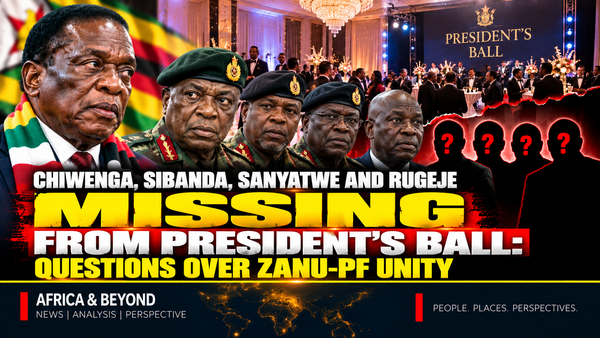
If the party’s elective congress is postponed from 2027 to 2030, the internal leadership contest could be delayed. Such a development would have implications for Chiwenga, who is widely viewed as a potential successor, as well as for other aspiring leaders.
But the issue is larger than Chiwenga’s personal ambitions.
A delayed congress could reduce the immediate opportunity for party members to renew their leadership. Conversely, separating the party presidency from the presidential candidacy could create a different arrangement in which the party leader and national presidential candidate are not necessarily the same person.
Whether such an arrangement is intended to facilitate continuity or to manage succession is a matter that must be assessed against the actual amendments, the political circumstances and the decisions eventually adopted.
What is clear is that the party’s internal rules have become central to the struggle over who will exercise power in the years ahead.
A warning against decisions imposed from above
Chiwenga’s call for “brutal and honest self-appraisal” deserves equal attention.
He asked whether party resolutions genuinely reflect the wishes of ordinary members and whether conferences capture the aspirations of the grassroots.
These questions strike at the heart of internal party democracy. If provincial structures are expected merely to endorse proposals formulated by senior leaders, the distinction between consultation and political mobilisation becomes blurred.
The critical test is whether party members can freely question proposed constitutional changes without being branded disloyal or disruptive.
Chiwenga’s appeal also creates an obligation for himself. If he believes that the party must be guided by its members, he must demonstrate that commitment even when the outcome does not favour his own political interests.
Opposing a proposal that could delay his path to the presidency is not, on its own, evidence of a commitment to democratic reform. That commitment must be demonstrated through consistent support for transparent procedures, meaningful participation and institutional accountability.
The Tagwirei factor and the politics of influence
The speech also invites scrutiny of the wider distribution of power within ZANU-PF, including the growing prominence of businessman Kudakwashe Tagwirei.
Chiwenga did not mention Tagwirei. It would therefore be speculative to present the address as a direct attack on the businessman.
Nevertheless, the Vice-President’s rejection of individualistic approaches and his insistence that the party belongs to its members raise broader questions about the relationship between wealth, political influence and decision-making.
In any political organisation, the concentration of influence among a small circle of powerful individuals can undermine collective decision-making if established procedures become secondary to personal access and political patronage.
The relevant question is whether ZANU-PF’s succession arrangements are being determined through transparent institutional processes or shaped disproportionately by those with the greatest access to the incumbent leadership.
That question applies equally to Mnangagwa’s allies, Tagwirei, Chiwenga and anyone seeking to influence the party’s future.
Vision 2030: economic development or political survival?
Chiwenga’s speech was delivered under the theme, “From Resolutions to Results: Consolidating Economic Development and Deepening Economic Empowerment Towards Vision 2030.”
He challenged party members to move beyond declarations and deliver measurable improvements in people’s lives.
It was a legitimate challenge. Political conferences can produce ambitious resolutions without necessarily delivering jobs, higher household incomes, improved public services or greater economic security.
Yet the succession dispute raises a more uncomfortable question: why is so much political energy being directed towards leadership arrangements when ordinary Zimbabweans continue to demand tangible economic improvements?
If Vision 2030 is to mean more than a political slogan, its success must be measured through outcomes rather than speeches.
The same principle should apply to the party itself. Its leadership must demonstrate that constitutional debates and succession arrangements serve the organisation and the country rather than merely protecting the positions of powerful individuals.
Chiwenga’s emphasis on measurable results therefore provides an opportunity to scrutinise the Government’s record. It should not become a substitute for that scrutiny.
Is Chiwenga preparing the ground for a confrontation?
The most revealing aspect of the address may be its combination of formal loyalty and pointed institutional language.
Chiwenga fulfilled his ceremonial responsibility by introducing Mnangagwa as the conference’s guest of honour. At the same time, he reminded delegates that leaders are temporary custodians, that the party belongs to its members and that change must not be imposed from above.
This combination allows him to articulate principles with direct relevance to the succession debate without openly declaring a confrontation with the President.
It could be a carefully calibrated warning. It could also be an effort to establish his position before the party makes decisions that could affect his political future.
Neither interpretation can be conclusively established from the speech alone.
The decisive evidence will be Chiwenga’s subsequent conduct, the President’s response, the final wording of the proposed amendments and whether the party follows its own constitutional procedures.
If Chiwenga challenges the amendments on procedural grounds, that would clarify the nature of his objection. If he accepts arrangements that delay the leadership contest, the question will be whether he regards them as legitimate or has reached a political compromise.
His actions will reveal more than the carefully chosen words of a conference address.
The real test of ZANU-PF’s leadership
Chiwenga’s Chinhoyi speech has placed several principles at the centre of the party’s political debate: collective ownership, constitutional procedures, grassroots participation and leadership as temporary service rather than permanent entitlement.
Those principles are relevant to the succession struggle, but they also expose a difficult contradiction. A party that invokes the sacrifices of the liberation struggle must explain how its current leadership arrangements serve the people whose history it claims to represent.
The question is not simply whether Chiwenga wants to succeed Mnangagwa. It is whether ZANU-PF can manage succession through credible institutions rather than through arrangements primarily determined by the interests of its incumbent leadership.
And the same question must be put to Chiwenga: is his appeal to collective leadership a commitment to institutional reform, or is it principally a challenge to a political arrangement that may disadvantage him?
The ultimate test will not be who delivers the strongest speech. It will be whether the party respects its rules, allows genuine internal debate and places the interests of Zimbabweans above the ambitions of its political leaders.
The Chinhoyi address may not have been an open declaration of war, but it has supplied a powerful set of principles against which the next phase of ZANU-PF’s succession struggle can be judged.
Africa & Beyond — News | Analysis | Perspective