CHIWENGA, SIBANDA, SANYATWE AND RUGEJE MISSING FROM PRESIDENT’S BALL: QUESTIONS OVER ZANU-PF UNITY
ZANU-PF raised US$9.495 million at the President’s Ball, but Chiwenga’s absence and the non-appearance of former military figures Sibanda, Sanyatwe and Rugeje in published coverage raise questions amid succession tensions.

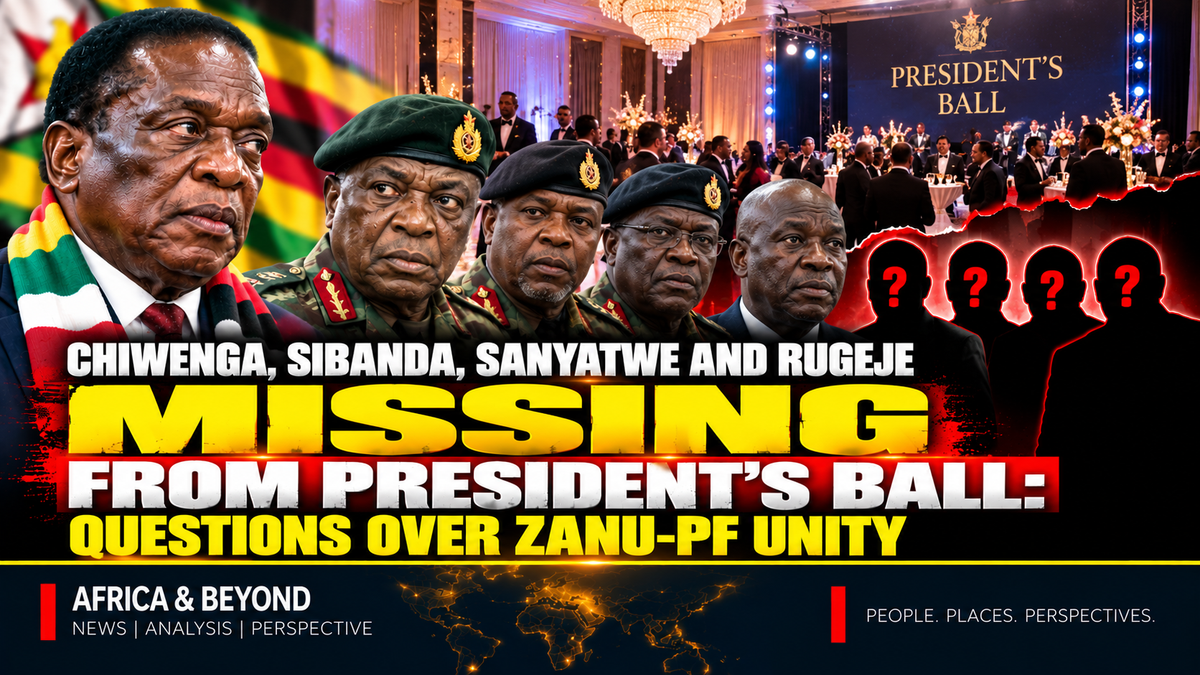
HARARE — President Emmerson Mnangagwa’s inaugural President’s Ball raised US$9.495 million for ZANU-PF’s forthcoming National People’s Conference. But beyond the fundraising milestone, the gathering has attracted attention over the senior political and military-linked figures who were not identified in the event’s published coverage.
Vice-President Constantino Chiwenga was notably absent from the dinner held at the Hippodrome in Braeside, Harare, on Saturday, 10 October 2026. His absence was reported by the media amid tensions surrounding proposed amendments to the ZANU-PF constitution.
General Philip Valerio Sibanda, the former Commander of the Zimbabwe Defence Forces, Anselem Sanyatwe and retired Lieutenant-General Engelbert Rugeje were also not identified in the published attendee reports reviewed for this article. Their absence has not been independently confirmed, and no explanation for their non-appearance has been established.
Nevertheless, the composition of the gathering and the political context surrounding it raise questions about unity within the ruling establishment.
Who attended the President’s Ball?
The event brought together senior party officials, government representatives, business leaders and other invited guests. Those named in published coverage included:
- Emmerson Mnangagwa — President of Zimbabwe and ZANU-PF leader.
- Auxillia Mnangagwa — First Lady.
- Kembo Mohadi — Vice-President and ZANU-PF Second Secretary.
- Jacob Mudenda — ZANU-PF Secretary-General.
- Oppah Muchinguri-Kashiri — ZANU-PF chairperson.
The dinner was organised to raise funds for ZANU-PF’s 23rd National People’s Conference in Chinhoyi. The initial fundraising target was US$6 million, but the final amount reported was US$9.495 million.
The attendance list matters because the gathering was not simply a social occasion. It was a high-profile party fundraising event held as ZANU-PF dealt with disagreements over proposed constitutional changes.
Chiwenga’s absence carries particular political significance
Of the figures whose attendance has become a subject of discussion, Chiwenga’s case is the clearest because his absence was explicitly reported.
The dinner followed reports of a cancelled ZANU-PF Politburo meeting amid a dispute over proposed amendments to the party constitution. Chiwenga has been identified in media coverage as a central figure in the political disagreement.
The timing makes his absence politically significant. A major fundraising event attended by the President and other senior party officials offered an opportunity to project unity ahead of the party’s national conference. Chiwenga’s absence instead drew attention to unresolved questions within the party’s leadership.
However, the available reporting does not establish whether he deliberately boycotted the dinner or what specific considerations informed his decision. The description of his absence as a boycott should therefore be treated as a media interpretation rather than a confirmed explanation from Chiwenga himself.
The former military figures and the question of political alignment
The absence of identifiable references to Sibanda, Sanyatwe and Rugeje raises a separate question about the wider political and security establishment.
Sibanda retired as Commander of the Zimbabwe Defence Forces in November 2025 and subsequently entered ZANU-PF’s political structures. Sanyatwe moved from a military career into civilian politics, while Rugeje is a retired senior military officer.
Their professional backgrounds make their relationship to Zimbabwe’s political establishment a legitimate subject of analysis. But it would be premature to assume that former military officers share a single political position or that their absence from one event reflects a coordinated decision.
If their absence is confirmed, it would be reasonable to ask whether they were invited, whether they had other commitments and whether their non-attendance had any connection to the party’s current disagreements. At present, there is insufficient public evidence to answer those questions conclusively.
The absence of former military figures would not, on its own, establish a breakdown in relations between the military and the political leadership. Nevertheless, it could become more significant if followed by public disagreements, further absences from major party functions or other verifiable signs of political distancing.
A party projecting strength amid internal questions
ZANU-PF has an interest in presenting its leadership as united, particularly before a national conference expected to shape the party’s political priorities. The successful fundraising outcome demonstrates the event’s ability to mobilise substantial financial support.
Yet financial success and political cohesion are not the same thing.
The reported disagreement over constitutional amendments, Chiwenga’s absence and the unanswered questions surrounding other prominent figures illustrate why observers are looking beyond the fundraising total to examine the party’s internal relationships.
The succession debate is especially important because proposed changes to presidential tenure affect the political calculations of senior figures whose future positions may depend on how the leadership question is resolved. Any extension of presidential tenure must also be assessed against Zimbabwe’s constitutional requirements, not merely the preferences of the ruling party.
The central issue is whether disagreements over constitutional change can be managed within the party’s established structures or whether they will produce more visible signs of division.
Could this signal political deterioration?
Political deterioration should not be inferred from attendance alone. It is better assessed through a pattern of developments, including repeated leadership disagreements, competing public positions, breakdowns in internal decision-making and the inability of political institutions to resolve disputes.
The reported cancellation of the Politburo meeting, the dispute over constitutional amendments and Chiwenga’s absence provide grounds for examining the state of relations within ZANU-PF. The unconfirmed attendance of Sibanda, Sanyatwe and Rugeje adds questions that require further investigation rather than definitive conclusions.
If additional evidence establishes that several senior figures deliberately stayed away, the political significance would increase—particularly if their absence coincided with documented disagreements over succession or constitutional change.
For now, the available evidence supports a measured conclusion: ZANU-PF is facing questions over internal cohesion at a politically sensitive moment, while the full significance of the President’s Ball attendance remains uncertain.
The coming conference, subsequent leadership engagements and any official explanations for the absences may provide clearer evidence of whether the current tensions represent a temporary disagreement or a deeper deterioration in the party’s political relationships.
Africa & Beyond — News | Analysis | Perspective