Intense Fighting Escalates in Northern Ethiopia as Tigray Rebels Declare Full-Scale War
Ethiopian government forces report heavy casualties inflicted on Tigrayan fighters amid a counter-offensive in the Amhara region, marking a significant escalation in the ongoing conflict.

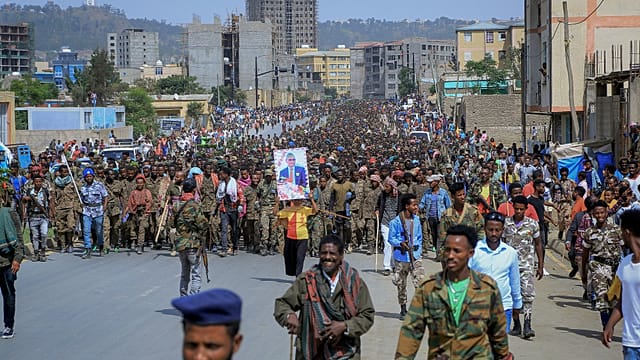
Fighting in northern Ethiopia has intensified sharply following a declaration of full-scale war by Tigray rebel forces. The Ethiopian National Defense Force (ENDF) announced that its troops have killed 272 fighters from the Tigray People's Liberation Front (TPLF) and wounded another 260 during a recent counter-offensive in the Amhara region.
This surge in violence marks a critical escalation in the conflict that has gripped northern Ethiopia since late 2020, when tensions between the federal government and the TPLF erupted into open warfare. The Amhara region, bordering Tigray to the south and west, has been a major battleground due to its strategic importance and contested territories.
While the Ethiopian army's casualty figures indicate significant losses for the Tigray forces, independent verification of these numbers remains unavailable. The ongoing conflict has severely restricted access for journalists and humanitarian agencies, complicating efforts to confirm reports from the frontlines.
The TPLF's declaration of full-scale war signals a shift from previous phases of the conflict, which included intermittent ceasefires and peace talks. This development suggests that the rebels are intensifying their military campaign, potentially leading to further destabilization in the region.
Government officials have framed the counter-offensive as a necessary response to Tigrayan aggression, aiming to restore federal authority and protect civilians in contested areas. Conversely, the TPLF and its supporters accuse the federal government of oppression and violations of human rights, though detailed statements from the rebel side regarding the recent escalation have not been publicly released.
The conflict has already resulted in thousands of deaths and displaced millions, exacerbating humanitarian crises including food insecurity and limited access to medical care. The renewed fighting threatens to worsen these conditions and complicate ongoing relief efforts.
Observers note that the international community faces challenges in mediating the conflict due to the complexity of local dynamics and the lack of reliable information. The next critical developments will likely hinge on whether either side seeks renewed negotiations or continues military escalation.
For the public and policymakers, monitoring the humanitarian impact and the potential for regional spillover is essential. The situation remains fluid, and further updates are expected as more information becomes available.
Africa & Beyond — News | Analysis | Perspective